
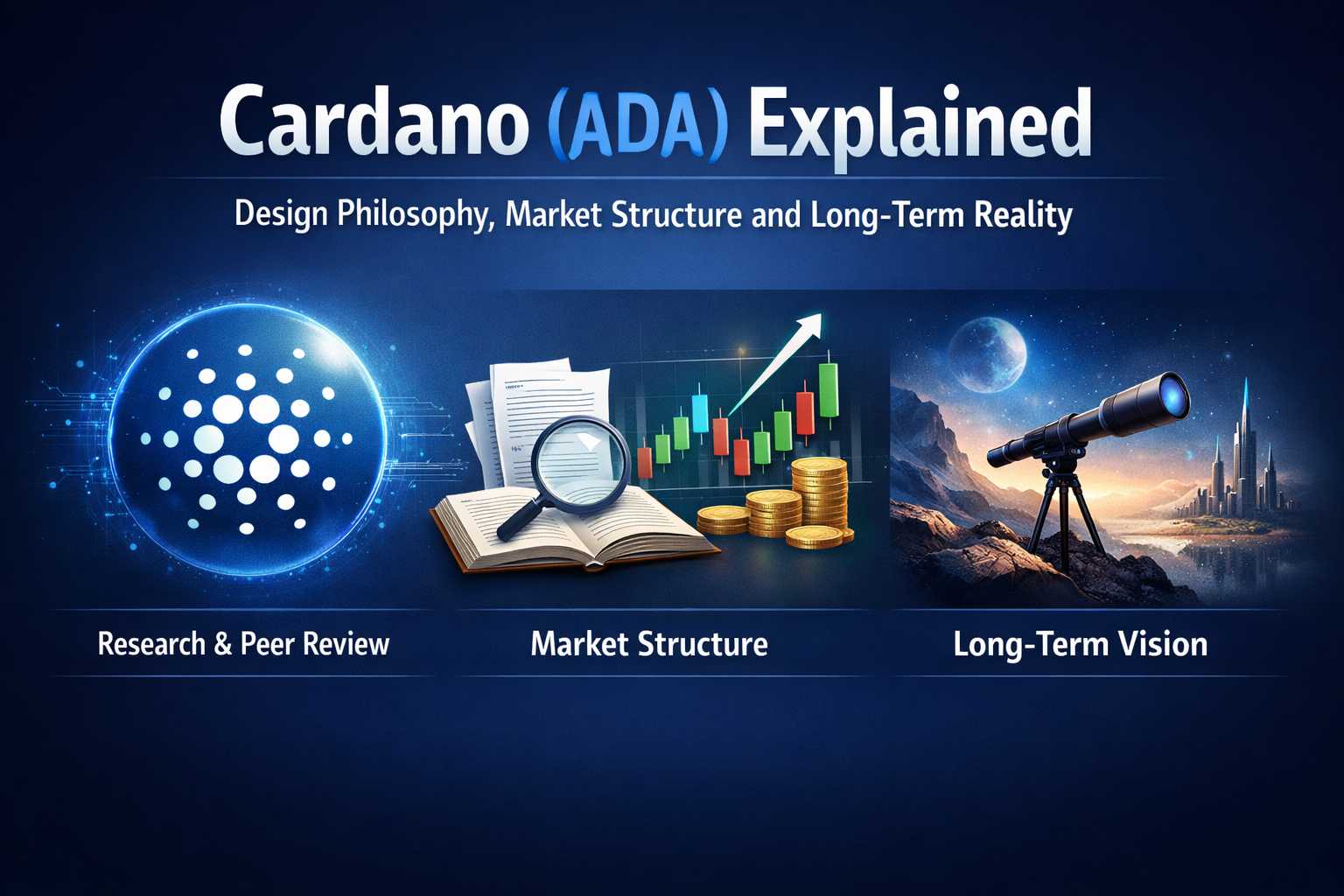
Cardano (ADA) is often described as one of the most academically driven blockchain projects in crypto. Built with a strong emphasis on research, peer review, and formal development, Cardano has taken a very different path compared to faster-moving ecosystems.
This deliberate approach has earned both strong supporters and vocal critics. To assess ADA fairly, it’s essential to look beyond narratives and focus on design philosophy, market structure, and realistic long-term positioning.
What Cardano Is Designed to Do
Cardano aims to be a secure, scalable, and sustainable smart contract platform.
Its core priorities include:
- Security-first architecture
- Formal verification
- Long-term protocol stability
Rather than rushing features to market, Cardano emphasizes correctness and resilience — even if that means slower visible progress.
Cardano’s Development Approach
Unlike many blockchain projects, Cardano follows a research-driven development model.
This means:
- Features are academically reviewed
- Protocol upgrades are methodical
- Changes are implemented conservatively
While this reduces the risk of critical failures, it also results in slower ecosystem growth compared to more aggressive competitors.
Cardano Market Structure Explained
ADA’s price behavior reflects its development philosophy.
Common characteristics:
- Long accumulation and consolidation phases
- Strong moves during broader market optimism
- Extended cooling periods when narratives fade
ADA often performs best during macro-driven altcoin cycles rather than short-term speculation.
Smart Contracts, DeFi and Adoption Reality
Cardano supports smart contracts and DeFi applications, but adoption has been gradual.
Key realities:
- Smaller DeFi ecosystem compared to Ethereum or Solana
- Fewer high-velocity applications
- Focus on stability over experimentation
This makes Cardano less attractive for fast-moving builders, but potentially appealing for long-term infrastructure use cases.
Who Cardano Makes Sense For
Cardano may appeal to investors who:
- Value security and formal design
- Accept slower ecosystem growth
- Prefer long-term theses over short-term narratives
It may disappoint investors expecting rapid innovation or explosive adoption curves.
Final Thoughts
Cardano is not a hype-driven ecosystem. Its value proposition lies in patience, structure, and long-term thinking. Whether that approach succeeds depends not on sentiment, but on execution and adoption over time.
For investors, ADA works best when viewed through a long-term, low-expectation lens, rather than as a momentum play.
Also Read -> XRP Analysis: Market Structure, Key Drivers & What Comes Next
Also Read -> Ethereum (ETH) Analysis: Market Structure, Key Drivers & What Comes Next
Arbitrum (ARB) Analysis: Architecture, Use Cases and Long-Term Positioning
Polygon (MATIC) Analysis: Architecture, Use Cases and Long-Term Positioning
Disclaimer: This article is for educational and informational purposes only and does not constitute financial advice. Cryptocurrency trading and investing carry significant risk, and individuals should do their own research before making financial decisions.