
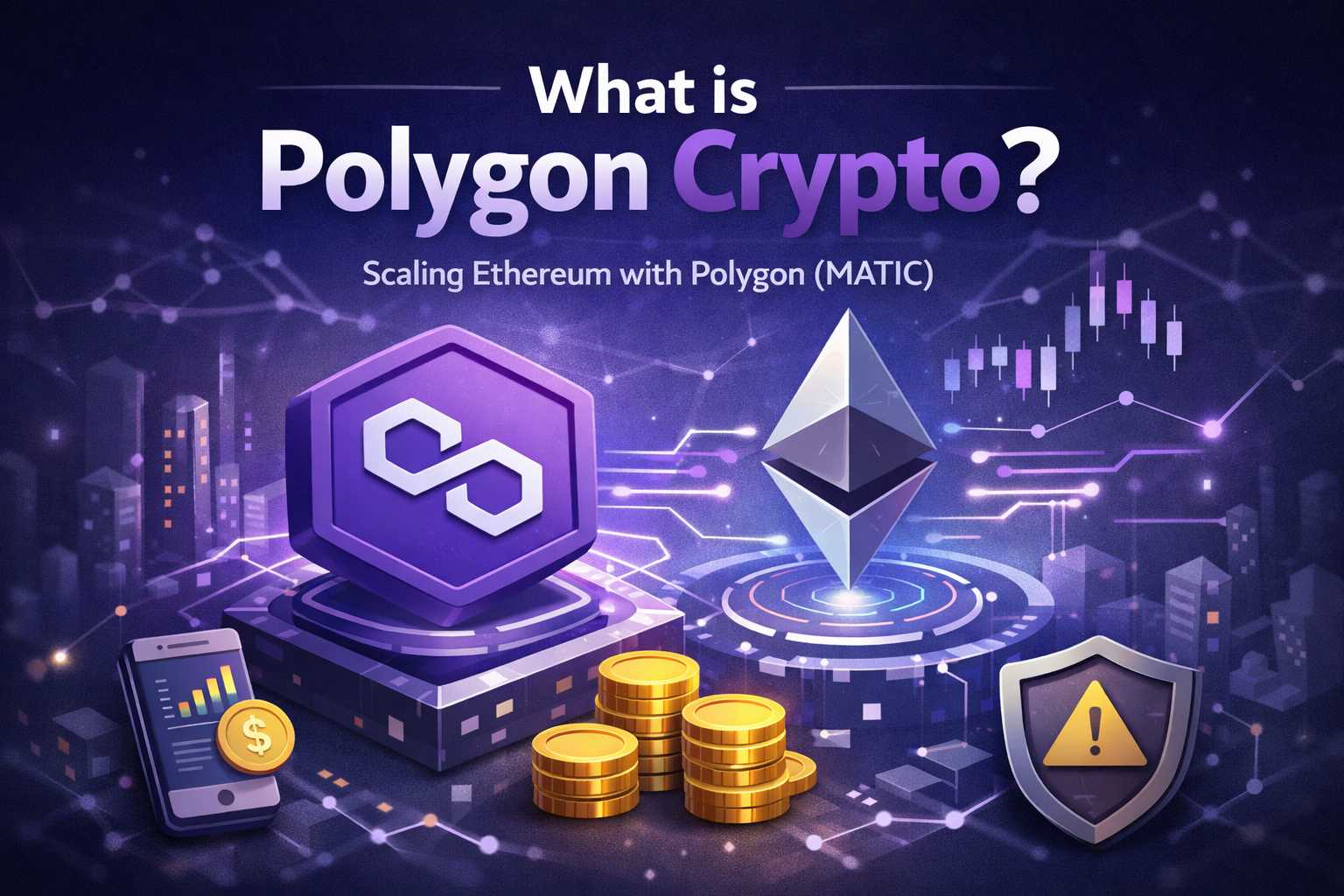
Polygon remains one of the most important blockchain scaling ecosystems connected to Ethereum.
As Ethereum adoption expanded, the network increasingly faced structural challenges involving:
- high transaction fees
- network congestion
- limited throughput
- poor scalability for mass adoption
- complex user experience
Polygon was built to help solve these problems.
Rather than competing directly against Ethereum, Polygon focuses primarily on enhancing Ethereum’s scalability, usability, and infrastructure efficiency.
Because of this positioning, Polygon occupies a structurally different role compared to many standalone Layer-1 blockchain ecosystems.
Today, Polygon plays an important role across several areas of the crypto market, including:
- Ethereum scaling
- Layer-2 infrastructure
- decentralized finance (DeFi)
- NFT ecosystems
- blockchain gaming
- enterprise blockchain adoption
- zk-rollup development
- consumer blockchain applications
Over time, Polygon evolved far beyond its original Proof-of-Stake sidechain infrastructure into a broader scaling ecosystem focused heavily on zero-knowledge technology and modular blockchain architecture.
In this analysis, we’ll explore:
- how Polygon works
- why Ethereum scaling matters
- Polygon’s Layer-2 infrastructure
- Polygon zkEVM and zero-knowledge scaling
- MATIC and POL tokenomics
- Polygon’s role within DeFi and gaming
- enterprise and institutional adoption
- how Polygon differs from other scaling ecosystems
- the biggest strengths and risks surrounding Polygon
- how investors often position Polygon within broader crypto portfolios
Why Ethereum Scaling Became Necessary
Ethereum remains the dominant smart contract ecosystem within crypto markets.
However, as adoption expanded, Ethereum increasingly faced scalability limitations involving:
- expensive transaction fees
- slower execution during congestion
- reduced accessibility for retail users
- limited throughput for mass adoption
This created demand for scaling infrastructure capable of improving efficiency while still benefiting from Ethereum’s security and liquidity.
Scaling became especially important for sectors involving:
- DeFi trading
- NFT activity
- gaming applications
- consumer blockchain apps
- microtransactions
- on-chain social platforms
Without scalable infrastructure, many blockchain applications become too expensive or inefficient for mainstream usage.
This environment created major opportunities for Layer-2 ecosystems like Polygon.
What Makes Polygon Different?
Polygon originally launched as Matic Network before evolving into a broader Ethereum scaling ecosystem.
Unlike standalone Layer-1 blockchains attempting to compete directly with Ethereum, Polygon focuses heavily on:
- Ethereum compatibility
- Layer-2 scalability
- modular blockchain infrastructure
- interoperability
- zero-knowledge technology
Polygon’s long-term vision centers around building scalable blockchain infrastructure connected directly to Ethereum’s ecosystem.
Rather than replacing Ethereum, Polygon attempts to strengthen Ethereum’s usability and scalability.
This distinction remains central to Polygon’s positioning.
Layer 1 vs Layer 2 vs Layer 3 Explained: Scalability, Blockchain Infrastructure & Why It Matters
Polygon’s Architecture Explained
Polygon evolved into a multi-layered scaling ecosystem supporting several forms of blockchain infrastructure.
These include:
- Proof-of-Stake sidechains
- zk-rollups
- modular scaling systems
- interoperability infrastructure
- Ethereum-compatible execution environments
Polygon processes large amounts of blockchain activity outside Ethereum’s congested base layer before interacting with Ethereum settlement infrastructure.
This reduces:
- network congestion
- transaction costs
- execution bottlenecks
while maintaining compatibility with Ethereum’s broader ecosystem.
Because of this architecture, Polygon became one of the most widely adopted Ethereum scaling ecosystems.
Polygon zkEVM and Zero-Knowledge Scaling
One of Polygon’s most important long-term developments involves zero-knowledge (zk) infrastructure.
Polygon increasingly focuses on:
- zk-rollups
- zkEVM technology
- zero-knowledge scalability systems
Zero-knowledge rollups process transactions externally before submitting compressed proof data back to Ethereum.
Supporters argue this improves:
- scalability
- transaction efficiency
- lower fees
- Ethereum compatibility
- long-term decentralization
Polygon zkEVM specifically aims to maintain compatibility with Ethereum smart contracts while benefiting from zero-knowledge scalability.
This became one of Polygon’s most important competitive areas because many investors view zero-knowledge technology as one of blockchain infrastructure’s largest long-term growth sectors.
Why Zero-Knowledge Technology Matters
Zero-knowledge technology is increasingly viewed as one of the most important scalability innovations within blockchain infrastructure.
Supporters believe zk-systems may improve:
- scalability
- privacy
- transaction efficiency
- Ethereum throughput
- consumer usability
As blockchain adoption expands, scalable infrastructure capable of supporting large user bases becomes increasingly important.
Because of this, zk-rollup competition intensified significantly across crypto markets.
Polygon remains one of the largest ecosystems participating in this infrastructure race.
Polygon and Ethereum Compatibility
One of Polygon’s strongest advantages is Ethereum compatibility.
Polygon supports:
- Ethereum smart contracts
- Ethereum tooling
- Ethereum wallets
- Ethereum developer infrastructure
This compatibility made it easier for developers to migrate or expand applications into Polygon’s ecosystem.
It also allowed Polygon to benefit heavily from Ethereum’s:
- liquidity
- developer activity
- user base
- DeFi infrastructure
- institutional integration
Rather than rebuilding an entirely separate ecosystem, Polygon positioned itself as an extension of Ethereum’s broader blockchain economy.
Polygon and DeFi Infrastructure
Polygon became heavily integrated into decentralized finance expansion cycles.
The ecosystem supports:
- decentralized exchanges
- lending protocols
- yield farming systems
- stablecoin infrastructure
- liquidity pools
- on-chain trading platforms
Because Polygon offers lower fees compared to Ethereum’s base layer, many users migrated activity toward Polygon during periods of high Ethereum congestion.
This helped Polygon become one of the largest Ethereum-connected DeFi ecosystems.
However, Polygon still faces strong competition across the broader Ethereum scaling landscape.
Competing ecosystems continue evolving rapidly through:
- optimistic rollups
- zero-knowledge rollups
- modular execution layers
- alternative Layer-2 infrastructure
- Ethereum-native scalability solutions
Maintaining long-term developer activity, liquidity, and ecosystem relevance remains one of Polygon’s biggest strategic challenges.
Polygon and Gaming Infrastructure
Polygon also positioned itself aggressively within blockchain gaming and NFT infrastructure.
Gaming applications often require:
- low fees
- fast execution
- scalable infrastructure
- smooth user experience
Polygon’s architecture made it attractive for:
- NFT marketplaces
- gaming ecosystems
- digital collectibles
- consumer blockchain applications
Several gaming and entertainment companies explored Polygon integrations because of its Ethereum compatibility and lower operational costs.
This consumer-facing infrastructure remains one of Polygon’s major long-term growth narratives.
Crypto Gaming Explained: Blockchain Gaming, Digital Ownership & Why Investors Still Watch the Sector
MATIC, POL and Tokenomics
Polygon originally used the MATIC token as its core utility asset.
Over time, Polygon began transitioning toward the POL token as part of Polygon 2.0 ecosystem upgrades.
These tokens support:
- transaction fees
- staking participation
- governance
- ecosystem security
- validator incentives
Polygon’s tokenomics remain closely connected to:
- ecosystem activity
- scaling adoption
- network usage
- infrastructure expansion
Like most crypto assets, Polygon’s price behavior remains heavily influenced by broader market liquidity conditions and speculative cycles.
Polygon vs Ethereum Layer-2 Competitors
Polygon operates in an increasingly competitive Layer-2 environment.
Major competitors include:
- Arbitrum
- Optimism
- Base
- zkSync
- Starknet
Each ecosystem follows different scaling strategies involving:
- optimistic rollups
- zk-rollups
- modular execution systems
- Ethereum settlement infrastructure
Polygon differentiates itself through:
- broad scaling infrastructure
- zk investment
- enterprise partnerships
- Ethereum compatibility
- multi-product ecosystem design
Whether this broader ecosystem approach ultimately succeeds long term remains one of the biggest open questions surrounding Polygon.
Polygon and Institutional Adoption
Polygon has attracted significant institutional and enterprise attention compared to many crypto ecosystems.
Large companies explored Polygon infrastructure for areas involving:
- NFT systems
- loyalty programs
- blockchain payments
- tokenized assets
- digital identity systems
Supporters argue Polygon’s lower fees and Ethereum compatibility create attractive conditions for enterprise blockchain experimentation.
However, institutional blockchain adoption still depends heavily on:
- regulation
- compliance frameworks
- consumer demand
- long-term scalability
- real-world implementation
Risks and Challenges
Despite its strong positioning, Polygon still faces major long-term risks and challenges.
These include:
- Layer-2 competition
- Ethereum scaling evolution
- ecosystem fragmentation
- regulatory uncertainty
- tokenomics transitions
- developer competition
- infrastructure complexity
- liquidity fragmentation
Critics also argue that Ethereum scaling ecosystems may become overcrowded as competition intensifies.
Others question whether standalone Layer-2 ecosystems can maintain durable competitive advantages long term.
Like most blockchain infrastructure projects, Polygon remains highly sensitive to broader market liquidity and adoption cycles.
How Investors Often View Polygon
Within crypto markets, Polygon is often viewed as Ethereum scaling infrastructure exposure.
For many investors, Polygon represents exposure to:
- Ethereum scalability
- Layer-2 infrastructure growth
- zero-knowledge technology
- blockchain gaming infrastructure
- DeFi scalability
- enterprise blockchain adoption
Compared to speculative meme ecosystems, Polygon is generally viewed more as infrastructure-focused blockchain exposure.
At the same time, Polygon remains highly volatile and heavily influenced by broader crypto market conditions.
Conclusion
Polygon remains one of the most important Ethereum scaling ecosystems within cryptocurrency markets.
Unlike standalone Layer-1 blockchains competing directly against Ethereum, Polygon focuses heavily on:
- Layer-2 scalability
- Ethereum compatibility
- zero-knowledge infrastructure
- blockchain usability
- scalable consumer applications
Its role across:
- Ethereum scaling
- DeFi infrastructure
- NFT ecosystems
- gaming applications
- zk-rollup development
- enterprise blockchain adoption
continues positioning Polygon as a major participant within blockchain infrastructure markets.
At the same time, Polygon still faces important challenges involving:
- Layer-2 competition
- ecosystem fragmentation
- scalability races
- tokenomics transitions
- regulatory uncertainty
Future developments surrounding zero-knowledge technology, Ethereum adoption, consumer blockchain infrastructure, and enterprise integration may significantly influence Polygon’s long-term trajectory.
For investors, Polygon is often viewed less as a speculative crypto asset and more as infrastructure exposure tied to Ethereum scalability and long-term blockchain adoption.
Whether Polygon ultimately maintains long-term relevance will depend heavily on its ability to compete within the rapidly evolving Ethereum scaling ecosystem while continuing to expand infrastructure adoption across both retail and institutional markets.
How to Do Your Own Research (DYOR) in Crypto
Avalanche (AVAX) Analysis: Architecture, Use Cases and Long-Term Positioning
Chainlink Explained: Why LINK Keeps Showing Up in Serious Crypto Infrastructure
Solana (SOL) Analysis: Speed, Scalability and the Road Ahead
Disclaimer: This article is for educational purposes only and does not constitute financial advice. Cryptocurrency investments involve significant risk. Always conduct your own research before making financial decisions.