
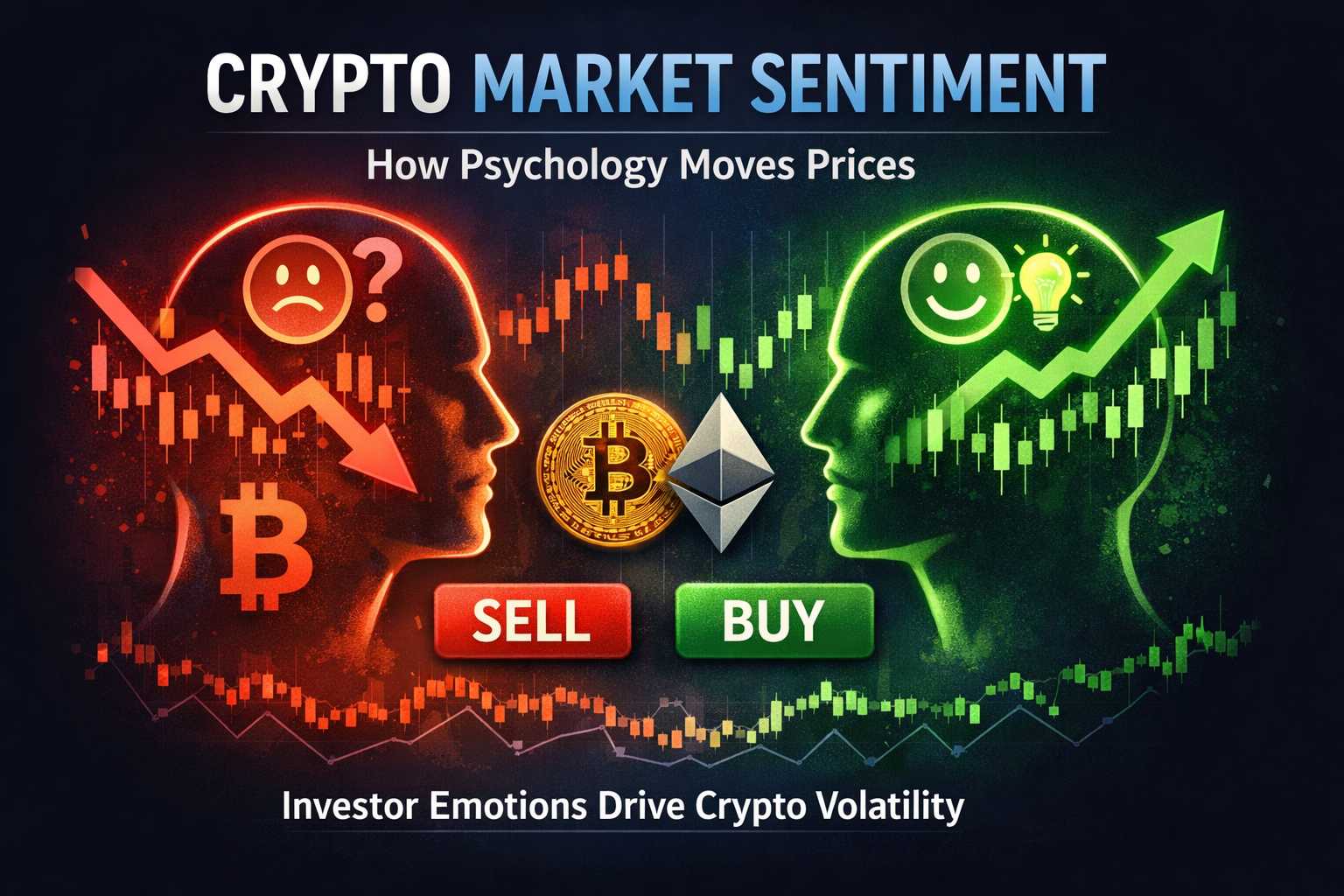
Cryptocurrency markets are often described as highly volatile and unpredictable.While technological developments and macroeconomic events certainly influence prices, another powerful force frequently drives market movements: investor psychology.
Market sentiment reflects the collective emotions and expectations of investors. Fear, optimism, uncertainty and speculation can all shape how market participants behave, sometimes leading to rapid price swings.
Understanding sentiment helps investors recognize why markets move the way they do and how emotional reactions can influence trading decisions.
What Is Market Sentiment?
Market sentiment refers to the overall attitude of investors toward a particular asset or market.
In crypto, sentiment is often categorized into two broad conditions:
Bullish sentiment: When investors expect prices to rise and confidence is high.
Bearish sentiment: When investors expect prices to decline and caution dominates.
These psychological shifts can cause prices to move even when there are no major fundamental changes in the underlying technology or ecosystem.
Because cryptocurrency markets operate globally and trade continuously, sentiment can change very quickly.
Fear vs Greed in Crypto
Two emotional forces tend to dominate market sentiment: fear and greed.
Greed typically appears during strong price rallies. As markets rise, investors fear missing out on potential gains. This phenomenon, commonly known as FOMO (Fear of Missing Out), can push prices higher as more buyers enter the market.
Fear, on the other hand, emerges when prices begin to decline. Investors may rush to sell in order to protect capital, which can accelerate downward momentum.
These emotional cycles often create exaggerated market moves in both directions.
Sentiment Indicators
Several indicators attempt to measure market sentiment.
One well-known example is the Fear and Greed Index, which aggregates multiple data points such as volatility, trading volume and social media activity to estimate overall market mood.
Other sentiment indicators include:
- funding rates in derivatives markets
- social media trends
- trading volume spikes
- search interest on platforms like Google
- liquidation events in leveraged markets
While these indicators cannot predict market direction with certainty, they can provide useful insight into the emotional state of the market.
Social Media and Market Psychology
Social media plays a particularly strong role in shaping crypto sentiment.
Platforms such as Twitter, Reddit and online communities allow information — and sometimes misinformation — to spread rapidly. Narratives can form quickly, influencing how investors interpret market developments.
Positive narratives can attract new participants and amplify optimism. Negative sentiment, on the other hand, can spread fear and trigger sudden sell-offs.
Because crypto markets are heavily influenced by retail participation, sentiment shifts can occur much faster than in traditional financial markets.
Why Sentiment Changes Quickly
Cryptocurrency markets are still relatively young compared to traditional financial systems.
Several factors contribute to rapid sentiment changes:
- high market volatility
- global retail participation
- constant 24/7 trading
- strong influence of narratives and speculation
When these factors combine, even small events can trigger large emotional reactions across the market.
This environment creates both opportunities and risks for investors.
How Investors Can Use Sentiment
Understanding sentiment can help investors avoid common psychological mistakes.
For example, extreme optimism may signal overheated markets where risk is elevated. Similarly, extreme fear sometimes appears near market bottoms when many investors have already exited their positions.
Rather than reacting emotionally, experienced investors often monitor sentiment as a complementary signal alongside technical and fundamental analysis.
Maintaining discipline during both euphoric rallies and fearful downturns is one of the most important skills in volatile markets like crypto.
Conclusion
Market sentiment plays a powerful role in shaping cryptocurrency price movements.
While technological innovation and adoption remain important long-term drivers, short-term volatility is often fueled by investor psychology.
By recognizing how fear, greed and narratives influence market behavior, investors can better navigate volatility and make more rational decisions.
In rapidly evolving markets, understanding sentiment can provide valuable perspective beyond simple price analysis. Also Read ->
Why Crypto Sentiment Is Often Misleading (And Why Structure Matters More)
What Actually Moves Crypto Prices? Understanding the Real Market Forces
Disclaimer: This article is for informational purposes only and does not constitute financial advice. Cryptocurrency markets are volatile and involve significant risk. Always conduct your own research before making investment decisions.