
As blockchain ecosystems continue to evolve, scalability and user experience remain two of the biggest challenges in crypto adoption.
Many networks struggle with high fees, limited throughput, or complex onboarding processes that make decentralized applications difficult for mainstream users to access.
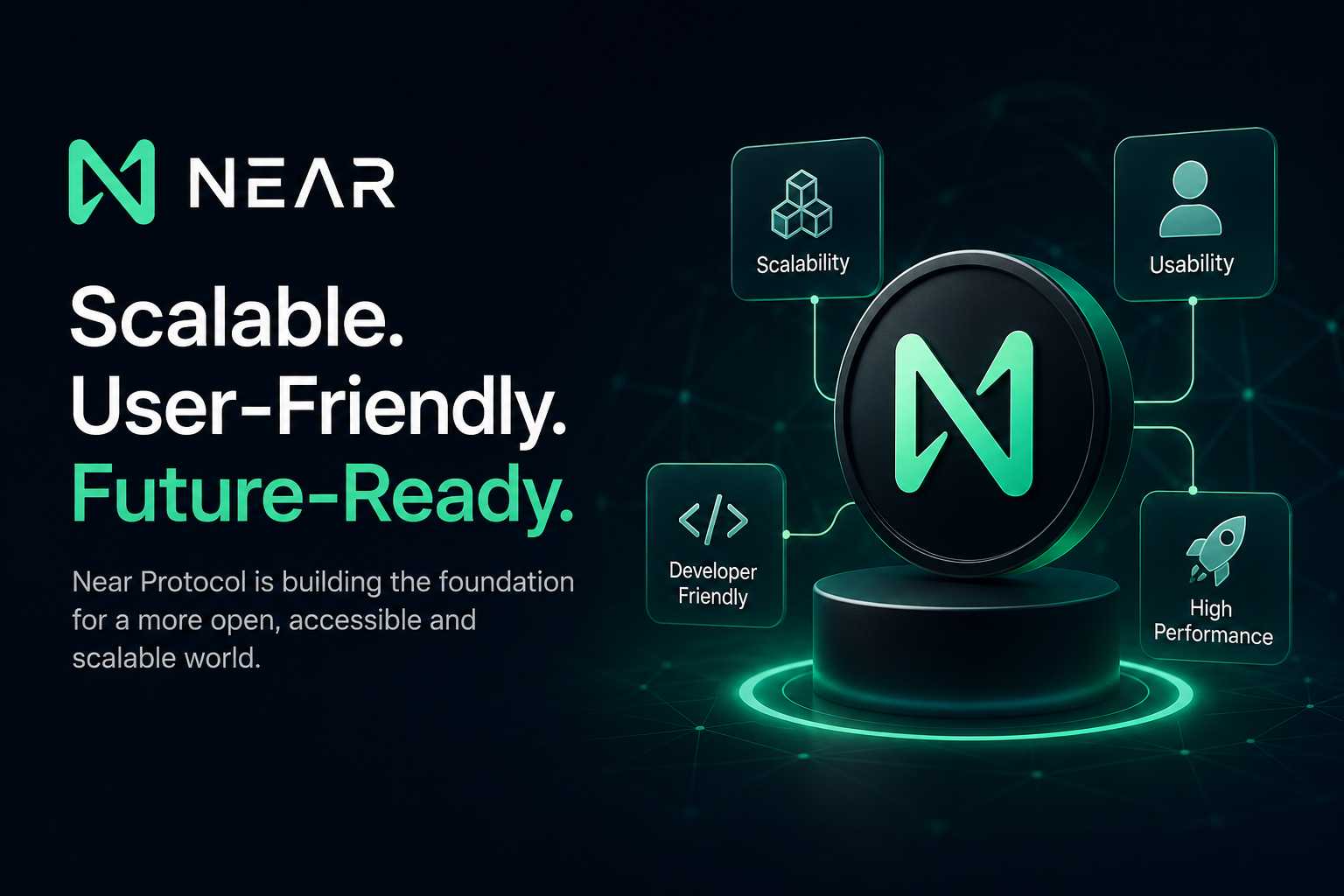
Near Protocol was developed with a focus on scalability, usability and developer accessibility. The project aims to create a high-performance blockchain infrastructure capable of supporting large-scale decentralized applications while simplifying the user experience.
Understanding Near Protocol requires examining its architecture, ecosystem design and the long-term role of the NEAR token within the broader crypto market.
Architecture and Technology
Near Protocol is a Layer-1 blockchain designed to improve scalability and transaction efficiency through a combination of sharding technology and proof-of-stake consensus.
The network is built around several core components.
Nightshade Sharding
Near uses a sharding design called Nightshade, which allows the blockchain to split transaction processing across multiple shards.
This architecture improves scalability by enabling the network to process transactions more efficiently without relying on a single chain handling all activity.
Proof-of-Stake Consensus
Near operates using a proof-of-stake consensus model where validators secure the network and process transactions.
This approach reduces energy consumption compared to proof-of-work systems while supporting faster transaction finality.
Developer and User Experience
One of Near’s primary goals is improving blockchain usability. The network supports:
- human-readable wallet addresses
- simplified onboarding
- developer-friendly tools
- lower transaction costs
This focus on accessibility is intended to make decentralized applications easier for mainstream users to adopt.
The Near Ecosystem
Near Protocol supports a growing ecosystem of decentralized applications and infrastructure projects.
The ecosystem includes:
- decentralized finance (DeFi) platforms
- gaming applications
- NFT ecosystems
- AI-related infrastructure projects
- cross-chain interoperability solutions
Near also supports Ethereum compatibility through Aurora, a Layer-2 solution that allows Ethereum-based applications to operate within the Near ecosystem.
This expands interoperability between blockchain networks while helping developers migrate applications more easily.
Use Cases
Near Protocol enables several blockchain use cases focused on scalability and usability.
Decentralized Applications
Developers can build scalable decentralized applications with lower fees and faster transactions compared to many traditional blockchain networks.
Gaming and Consumer Applications
Near’s focus on usability and transaction efficiency makes it suitable for gaming and consumer-facing applications that require high throughput.
Cross-Chain Infrastructure
Through Aurora and interoperability tools, Near supports communication between different blockchain ecosystems.
AI and Infrastructure Narratives
Near has increasingly positioned itself around infrastructure and AI-related blockchain applications, expanding its role beyond traditional decentralized finance.
Tokenomics
The NEAR token serves several functions within the ecosystem.
Network Security
NEAR is used for staking within the proof-of-stake system, helping validators secure the network.
Transaction Fees
The token is used to pay for transactions and smart contract execution across the ecosystem.
Governance
Token holders may participate in governance-related decisions involving protocol upgrades and ecosystem development.
Ecosystem Incentives
NEAR also supports incentives for developers, validators and ecosystem participants contributing to network growth.
Risks and Challenges
Like many Layer-1 blockchain projects, Near faces significant competition. The network competes with ecosystems such as:
Another challenge is long-term adoption. While Near offers strong scalability and usability features, attracting sustained developer activity and user growth remains essential for ecosystem expansion.
Additionally, blockchain infrastructure narratives can shift quickly, making long-term positioning highly competitive.
Long-Term Positioning
Near Protocol focuses on combining scalability, usability and developer accessibility within a single blockchain ecosystem.
Its emphasis on user-friendly infrastructure may help support broader mainstream adoption if decentralized applications continue to expand beyond crypto-native users.
The network’s integration of sharding technology, interoperability solutions and AI-related infrastructure narratives positions Near as a flexible blockchain platform within the evolving crypto landscape.
If scalability and usability remain central themes in blockchain adoption, Near Protocol may continue to play an important role within the broader ecosystem.
Conclusion
Near Protocol represents a scalability-focused blockchain ecosystem designed to improve usability, transaction efficiency and developer accessibility.
Through technologies such as Nightshade sharding, proof-of-stake consensus and cross-chain infrastructure, the network aims to support large-scale decentralized applications and mainstream blockchain adoption.
While competition within the Layer-1 sector remains intense, Near continues to position itself as an infrastructure-focused blockchain platform with long-term ambitions across decentralized applications, interoperability and AI-related ecosystems.
Understanding its architecture and ecosystem provides valuable insight into how scalable blockchain infrastructure may evolve in the future. Also Read ->
Bitcoin (BTC) Analysis: Market Structure, Key Drivers & What Comes Next
Polkadot (DOT) Analysis: Architecture, Use Cases and Long-Term Positioning
Polygon (MATIC) Analysis: Architecture, Use Cases and Long-Term Positioning
Disclaimer: This article is for informational purposes only and should not be considered financial advice. Cryptocurrency markets are volatile and involve significant risk. Always conduct your own research before making investment decisions.