
As the number of blockchain networks continues to grow, interoperability has become one of the biggest challenges in the crypto industry.
Most blockchains operate independently, limiting communication and data sharing between networks.
Polkadot was designed to address this issue by creating a framework where multiple blockchains can interact and exchange information securely.
Rather than focusing on a single chain, Polkadot aims to build an ecosystem of interconnected networks.
Architecture
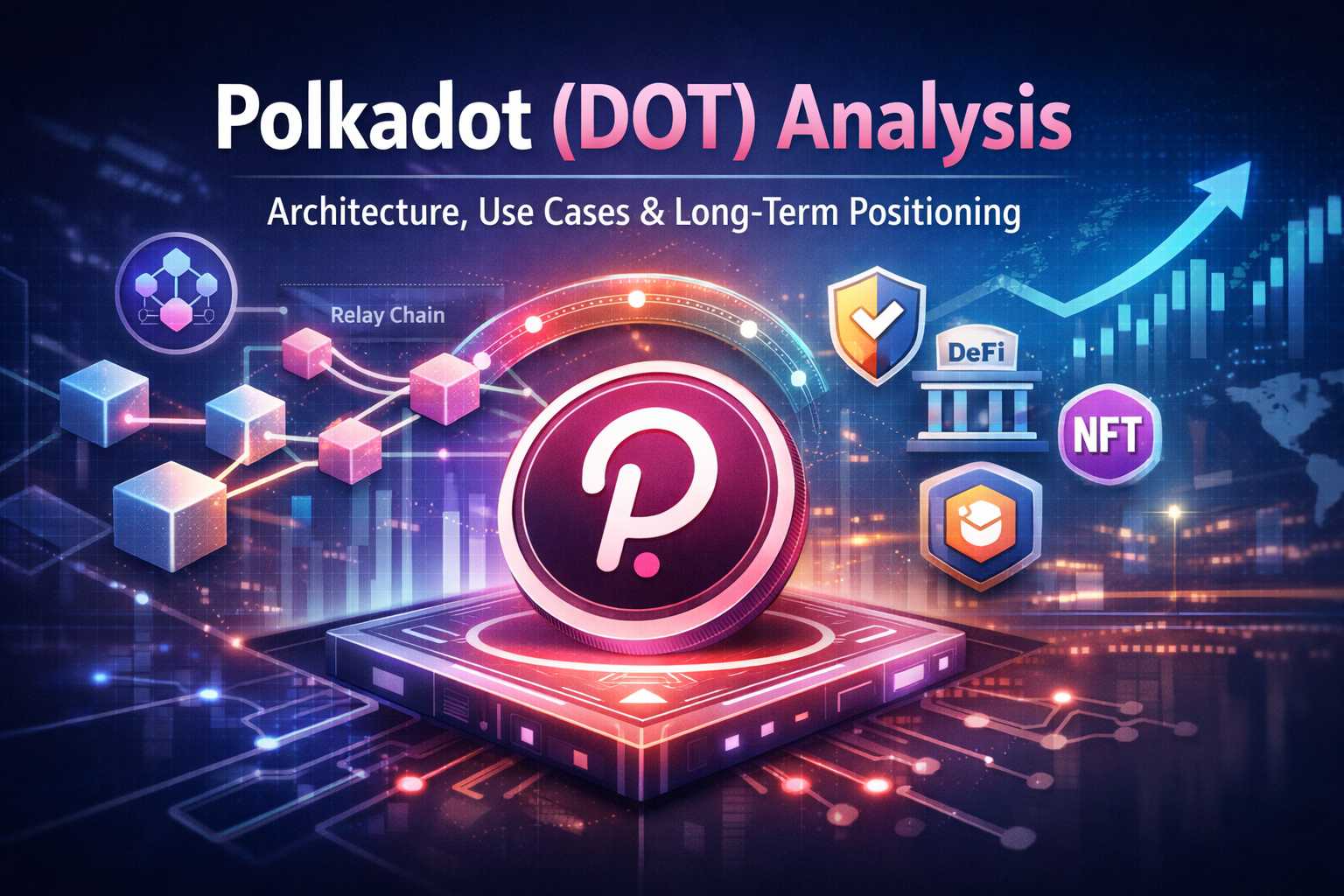
Polkadot uses a multi-chain architecture built around three core components:
Relay Chain: The Relay Chain is the central network responsible for security, consensus and cross-chain communication.
Parachains: Parachains are independent blockchains connected to the Relay Chain. Each parachain can be optimized for specific use cases such as DeFi, gaming or data storage.
Bridges: Bridges allow Polkadot to communicate with external blockchains like Ethereum or Bitcoin.
This structure enables parallel transaction processing, which increases scalability compared to single-chain systems.
Use Cases
Polkadot’s architecture allows developers to build specialized blockchains while maintaining shared security.
Common use cases include:
Decentralized Finance (DeFi): Parachains can host lending platforms, decentralized exchanges and financial infrastructure.
Cross-Chain Applications: Projects can interact with multiple blockchains simultaneously.
Blockchain Infrastructure: Developers can launch customized networks optimized for specific industries or technical requirements.
This flexibility is one of Polkadot’s core design principles.
Token Utility
The DOT token plays several important roles within the ecosystem.
It is used for:
- Network governance
- Staking to secure the network
- Bonding for parachain slot auctions
These mechanisms allow token holders to participate in network decisions while supporting ecosystem growth.
The demand for DOT is therefore closely connected to network activity and developer adoption.
Competitive Landscape
Polkadot operates in a competitive environment where several blockchain ecosystems aim to solve scalability and interoperability challenges.
Competing technologies include:
- Layer 2 scaling solutions
- Cross-chain bridges
- Alternative multi-chain ecosystems
While the technical vision is ambitious, long-term success will depend on developer adoption and real-world usage.
Risks and Challenges
Like many blockchain infrastructure projects, Polkadot faces several risks.
These include:
- competition from other interoperability solutions
- complex technical architecture
- slower ecosystem growth compared to some rivals
- uncertainty around long-term adoption
Infrastructure projects often require years to fully mature, which means investor patience is essential.
Long-Term Positioning
Polkadot’s long-term value proposition is centered around interoperability.
If the future of blockchain involves multiple specialized networks, solutions that enable communication between those networks could become increasingly important.
However, the ecosystem must continue attracting developers, applications and liquidity in order to remain competitive.
Long-term positioning will ultimately depend on whether Polkadot becomes a key infrastructure layer within the broader blockchain ecosystem.
Conclusion
Polkadot represents an ambitious attempt to solve one of the structural challenges in blockchain technology: interoperability.
Its multi-chain architecture allows developers to create specialized blockchains while maintaining shared security and communication.
For investors, the key question is not short-term price movements but whether cross-chain infrastructure will play a central role in the future of decentralized networks. Also Read ->
Avalanche (AVAX) Analysis: Architecture, Use Cases and Long-Term Positioning
Polygon (MATIC) Analysis: Architecture, Use Cases and Long-Term Positioning
Solana (SOL) Analysis: Speed, Scalability and the Road Ahead

Disclaimer: This article is for informational purposes only and does not constitute financial advice. Cryptocurrency markets are volatile and involve significant risk. Always conduct your own research before making investment decisions.