
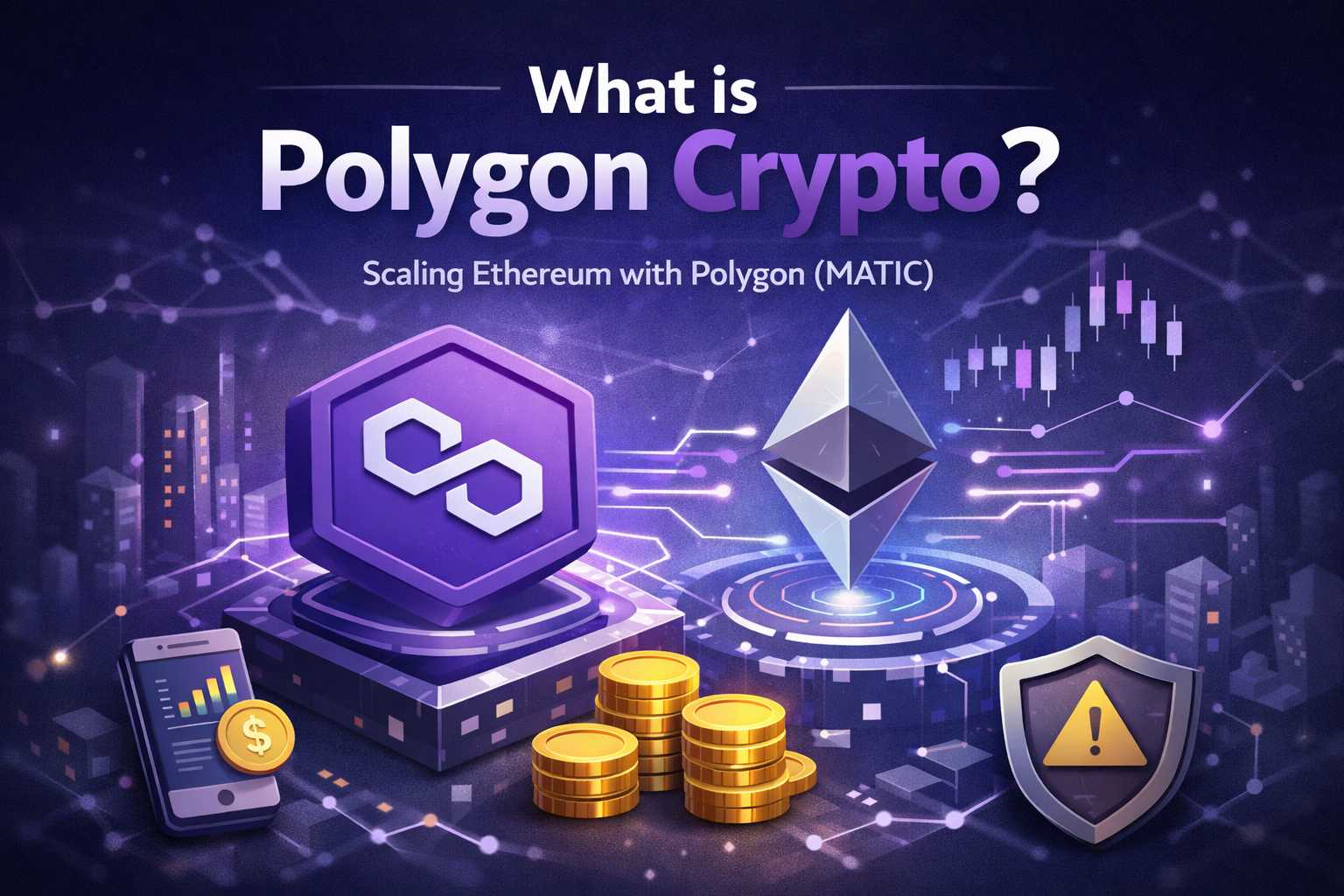
Ethereum remains the dominant smart contract platform in crypto.
However, as adoption increased, so did network congestion and transaction fees. Scaling became one of the biggest challenges in the ecosystem.
Polygon was built to address this issue.
Rather than replacing Ethereum, Polygon aims to enhance it. Its architecture focuses on scalability, efficiency, and interoperability — positioning it as a core infrastructure layer within the Ethereum ecosystem.
Understanding Polygon requires looking beyond price action and focusing on structure.
Architecture
Polygon began as Matic Network, originally offering a Proof-of-Stake sidechain to improve Ethereum’s performance.
Over time, it evolved into a broader scaling framework that includes:
- Proof-of-Stake chain
- Zero-knowledge (zk) scaling solutions
- Multi-chain interoperability infrastructure
Polygon processes transactions off Ethereum’s main chain, reducing congestion while still leveraging Ethereum for security anchoring.
This layered architecture allows developers to build scalable applications without sacrificing compatibility with Ethereum’s ecosystem.
Its long-term vision is often described as building an “Internet of Blockchains” connected to Ethereum.
Use Cases
Polygon supports a wide range of blockchain applications:
Decentralized Finance (DeFi): Lower fees make DeFi protocols more accessible to retail users.
NFTs: Polygon enables NFT minting and trading with significantly reduced transaction costs.
Gaming: Blockchain games benefit from faster and cheaper transactions.
Enterprise Integration: Several large companies have experimented with Polygon-based solutions due to its cost efficiency and Ethereum compatibility.
The combination of low fees and Ethereum integration makes Polygon attractive for projects that require scalability without losing network security.
Competitive Landscape
Polygon operates in a highly competitive environment.
Other Layer 2 and scaling solutions compete for market share, including optimistic rollups and zero-knowledge rollups.
Its advantages include:
- Early mover positioning
- Strong developer ecosystem
- Broad scaling roadmap
However, competition remains a key long-term variable.
Token Utility
The MATIC token (transitioning toward POL as part of ecosystem upgrades) serves multiple functions:
- Transaction fees
- Network staking
- Governance participation
Token value is closely linked to network usage and ecosystem expansion.
As with all crypto assets, market cycles strongly influence price performance.
Long-Term Positioning
Polygon’s long-term success depends on three factors:
- Continued demand for Ethereum scaling
- Technological innovation
- Ecosystem growth
If Ethereum remains central to decentralized applications, scaling solutions like Polygon are likely to remain relevant.
However, blockchain infrastructure evolves rapidly. Adaptability will determine long-term positioning more than short-term market performance.
Polygon represents infrastructure rather than speculation. Its value proposition lies in enabling scalability within Ethereum’s ecosystem.
For investors analyzing long-term positioning, the key question is not short-term volatility — but whether demand for scalable blockchain infrastructure continues to grow. In crypto, foundational layers often outlast trends.
Also Read ->
Avalanche (AVAX) Analysis: Architecture, Use Cases and Long-Term Positioning
Chainlink Explained: Why LINK Keeps Showing Up in Serious Crypto Infrastructure
Solana (SOL) Analysis: Speed, Scalability and the Road Ahead
Bitcoin (BTC) Analysis: Market Structure, Key Drivers & What Comes Next
Disclaimer: This article is for educational purposes only and does not constitute financial advice. Cryptocurrency investments involve significant risk. Always conduct your own research before making financial decisions.